Looking for online recommendations for food, to my delight I discovered a pizzeria with good reviews saying it was favoured by locals a mere five-minute walk away. The atmosphere was pleasant, the service was attentive, and the Parma and mushroom pizza was tasty. To my dismay this pizza along with a pint of beer cost thirty euros. Milan is also the financial capital of Italy and with Swiss style prices to match.
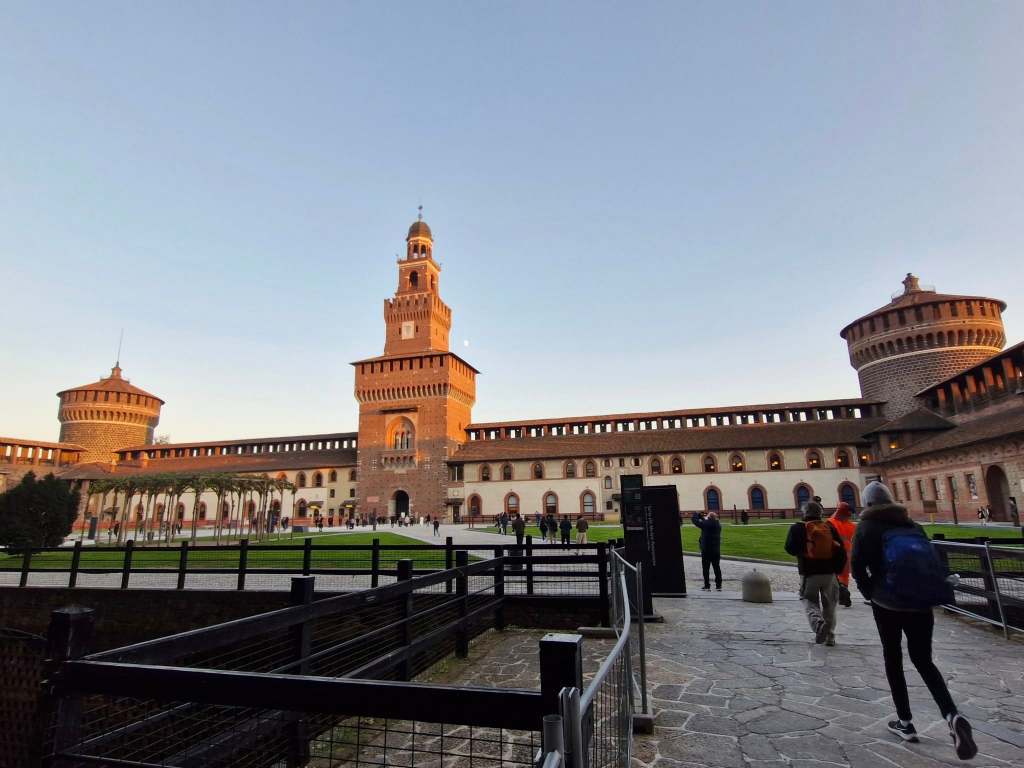
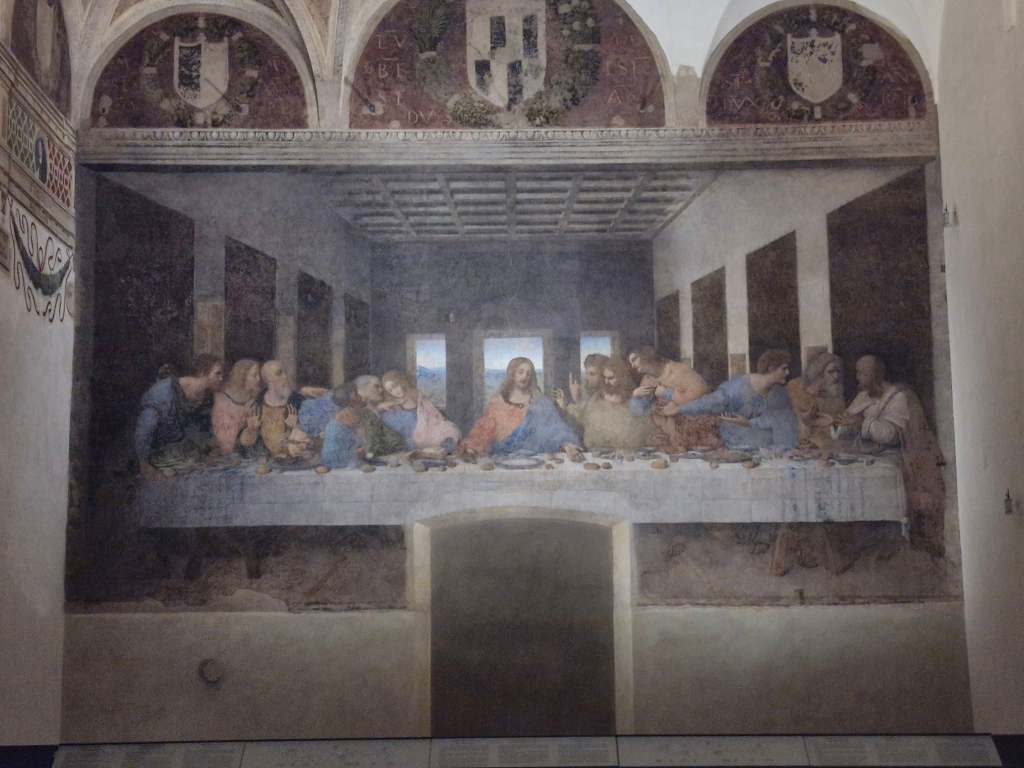
Checking out of my hotel the next morning I made my way back to the Central Rail station to deposit my luggage in storage. I’d be getting the bus back to Caravaggio Airport later from here so this was the appropriate location. It would take forty-five minutes to walk to the Piazza Santa Maria Della Grazie where the monastery housing The Last Supper was located. I took the tram. The monastery building is now owned by the Italian state while the church next door is still controlled by the church. Painted as a mural in the late 1490s the work was commissioned as part of a plan of renovations to the church and its convent buildings by Leonardo’s patron Ludovico Sforza – whose castle I had visited the day before. Our group of twenty assembled, went through security and were placed in an airtight room outside the monastery. At precisely midday the doors opened and our fifteen minutes with the painting began. It was strangely moving – I learned about this painting about forty years ago when I believed in God and have always wanted to see it. The guide explained to us that it’s a wonder it still exists. Leonardo painted it with paint suited to wood painting rather than stone and as a result it started deteriorating almost immediately. The monks had their kitchen next door with all the odours, and at one point they demolished part of the painting to place an extra door (you can see how it originally looked from copies of the piece painted by other artists). During World War II a bomb destroyed the nearby buildings leaving it exposed. Between 1978 and 1999 Pinin Brambilla Barcilon painstakingly restored the work, removing the ‘repairs’ carried out on the piece over the centuries. When our time was up, we had to leave immediately as the next group was waiting in the airtight room from which we had entered. I felt a bit sorry for Giovanni Donato da Montorfano, whose 1495 painting Crucifixion is on the opposite Leonardo’s Last Supper – unnoticed and unloved.
Upon exiting I made my way to the nearby Sant Ambrogio church – the oldest in Milan dating back to the fourth century, before making my way back to the station.
I did not see all that Milan had to offer as my visit was so brief. I do not have an overwhelming desire to return. It’s an impressive city (like all Italian cities) but it seems a little cold, charmless and business oriented. I am happy to have visited but will not be returning for holidays.
Que bella luna.
 midnightmurphy