My brother lives in Burlington Vermont with his wife and daughter. Vermont is a rural state with a population of approximately 640,000 residents (only Wyoming has less people) and impossible to fly directly from Europe. When I visit I fly via a city that has a direct connection from Ireland and an onward connection to Burlington International Airport (the once a week flight to Toronto Canada renders it international). Two years ago I visited from Chicago. Last year was via Montreal (only an hour’s drive away). This year I almost selected New York as my departure point until I looked at the catastrophic hotel prices in Big Apple. Checking which US cities had connections to Burlington, my choices were Atlanta, Denver, Seattle or Philadelphia. Philadelphia was the option I selected – the flight times and prices were the best on offer – plus it was a city I had always wanted to visit.
The journey to Philadelphia was rather stressful. At least the start of it.
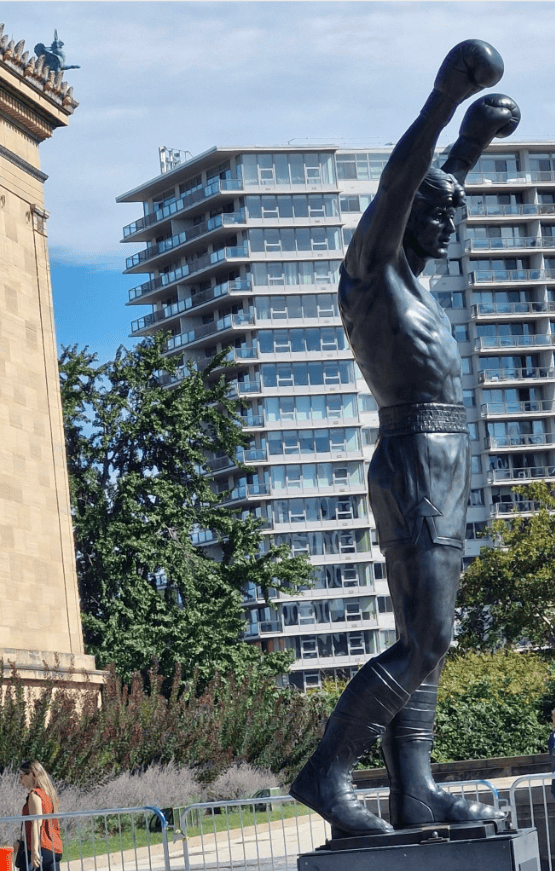
Rocky st
Flying from Ireland involves US pre-clearance so you are already in the US before the flight departs and you land in a domestic terminal upon arrival. I was informed that I had been ‘randomly selected’ for additional TSA security screening.
My bags were opened and every item was swabbed and tested. Then I was patted down in a thorough fashion. Very thorough. Thankfully my clothes remained on but every inch of me was inspected. Front and back. Up and down. It was nice of him to give me advance warning what he was doing at each stage I guess?
Afterwards came border security where the stone-faced gentleman questioned me. I had my brother’s address on my phone to provide to him. Eventually I was let through while a framed picture of Donald J Trump smirked at me from the wall behind the desk.
Arriving at Philly I decided that if I would take the public bus to the hotel in the town of Essington close to the airport from where I would depart for Vermont the next day. I boarded it like Sandra Bullock in ‘Speed’ and looked ay my fellow passengers. Some had seen better days. Most in fact. When I disembarked I didn’t waste time. There was an eerie vibe about the neighbourhood. Silent but a little sinister.
After checkin I went to the 24 hour New Philly Diner next door for a Philly cheesesteak and broccoli (the waitress asked if I wanted fries or Mac and Cheese as a side. The human in me craved either or both. However the Type 1 diabetic in me selected the broccoli).
My mother was diagnosed with bowel cancer eight years ago. It was two days before the birth of my first nephew and while I was serving on a jury for a horrific trial in the central criminal court in Dublin. Thankfully her treatment was successful and she remains hale and hearty.
About four months after she received the all clear her doctor advised any of her children aged north of forty to undergo a colonoscopy to facilitate early detection of cancer if there was a familial risk.
With a speed synonymous with snails I finally asked my doctor to refer me for one this year. I thought I’d be waiting for several years considering how long waiting lists are on the Irish public health system. However my GP had other plans. He saw that I had private health insurance through work. Within two weeks I had an appointment in the new private Bons Secours hospital in Limerick.
I wasn’t particularly worried. I knew the test was merely precautionary. And two years earlier, my employer had done a free bowel screening campaign for staff. Dutifully I bagged a sample of excrement, sent it to the screening service and the results came back clear, several weeks later. A bowel screening was not a colonoscopy however. A colonoscopy is more thorough. It’s a test whereby a tube with a camera is inserted up the jacksie to view the inside of the large intestine and rectum to screen for bowel cancer or polyps that may later develop into cancer. Not exactly an appealing prospect but an effective method of screening. It was something that was a nagging reminder. Something that I knew I should undergo. But the inclination to actually do it was weak.
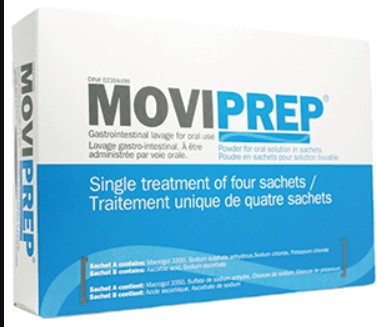
The letter of invitation contained a prescription for four sachets of an anti-constipation powder named Movicol; and a larger sachet for a heavy duty laxative named Moviprep. One’s inners were meant to be sparklingly clean for the camera tube to do its work.
In recent years I have started travelling to destinations more exotic (or simply further away) than those in Europe or North America. Places which pose a slightly greater challenge to reach and spend time in. Places without a Ryanair ready tourist infrastructure. In the last three years I have been to Nigeria (for a wedding); India (for a solo trip); Thailand and Cambodia. South America had long been on my wish list but plans to go there had never been more than an ephemeral ‘One day’ wish. I always considered it to be a place that I’d need to visit as part of an organised tour. I was somewhat intimidated by rumours of danger.
Until this year when I decided that ‘One day’ meant 2026, and that I didn’t need to be part of a larger group other than with a friend. And that I was well able to organise the trip myself.
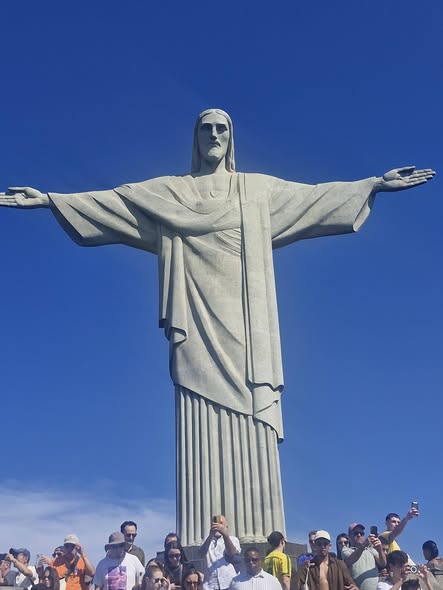
We decided that our first stop was the city of the cheesy Peter Allen; Barry Manilow and Frank Sinatra songs – Rio de Janeiro. And what while there we would be located at the Copacabana beach.
We arrange to meet in Lisbon Airport. I had a ten hour layover before our 11.30pm flight to Brazil. This meant an excursion into the city. Waiting to exit the airport I found myself in a slow moving but aggressive queue. Listening to the voices around me I realised that everyone in the queue was from the UK.
‘Is this the UK queue?’ I innocently asked a surly man ahead of me.
‘It’s the non-EU queue’ was his taciturn response.
Like a middle-aged gazelle I skipped out of that queue towards the electronic gates with my Irish passport to make my way to the Metro station that would take me to town.
My trip into Lisbon was brief – it lasted four hours. I went to the Alfama district to see the cathedral which was impressive but lacking the gaudy razzmatazz of a Spanish or Italian church. I also visited the chapel where St Anthony was born. I have no idea who St Anthony is, but he sounds like a very important Catholic saint.
We landed at Galaeo Airport in Rio de Janeiro at 5.30am and after immigration and bag collection took an Uber to the hotel arriving at 8am. Our heavily tattooed receptionist Juan was super sorry that our rooms wouldn’t be ready until 2pm but stored our bags while we ventured to the Botanic Gardens – a serene way to spend a few hours. I had paid for a coffee in the airport upon arrival in Brazil. When I tried to pay the entrance to the gardens to my horror my bank card had been frozen. Being extremely tired after an overnight flight it took me a few hours to check my text messages where I discovered that the bank had merely halted my card due to suspicious activity. A cappuccino in Rio de Janeiro was a tad more adventurous than the chicken and coleslaw sandwich from Spar in Limerick that my card is usually used for. We chanced our arm and arrived back at the hotel at 1pm but to no avail. The room was still not ready So we wandered down to Copacabana Beach which was a few hundred metres away and had a strawberry caipirinha at a beach bar in the 30 degree autumn sun while the samba band played.
After an early first night we had a favela tour planned for the morning of our first full day.
A favela is an unplanned urban development built in the hills surrounding the planned section of a Brazilian city. They tend to be impoverished and outside the realm of police control and instead ruled by gangs. The houses within the favelas are built by the residents. The higher up in the hill your house is located the less likely it is that services like running water are present (electricity is always present as favela dwellers who work for the electricity company will hook you up to the grid – for a fee.
Rocinha close to Copacabana is the largest favela in Brazil. Home to 200,000 residents it is controlled by the Red Command gang – a drug trafficking and arms dealing organisation which controls the district. A few years ago the rival drug gangs in the favela were removed by the police and now the Red Command gang have an understanding with the police – so long as there is no petty crime in the favela the Gardai will not enter. Meaning it’s fairly safe for tourists. Petty crime against tourists will require a police response inside the favela which the gang does not encourage
The tour of the favela I had booked for 10am was cancelled by the guide at 10pm the night before due to a personal tragedy. I declined his offer of a tour at the same time the following day, Being a person of class I decided that 24 hours is too short to get over a tragedy. Instead I booked a tour of the Santa Marta favela at the same time this morning.
At 10am at the designated spot we arrived. At 10.05 a woman who seemed chemically altered approached and whispered ‘I live near here’. I resisted the urge to inquire why that would be of interest to me. The very serious Bavarian woman was also waiting asked her ‘Are you our guide?’
‘Yes’ replied the woman.
And then the local stallholder selling fruit juice shouted ‘Don’t go with her, she is not a guide’. At 10.20 we decided to leave as our actual guide had not appeared. I shudder to think where the lady would have taken us. To have our personal belongings removed I suspect.
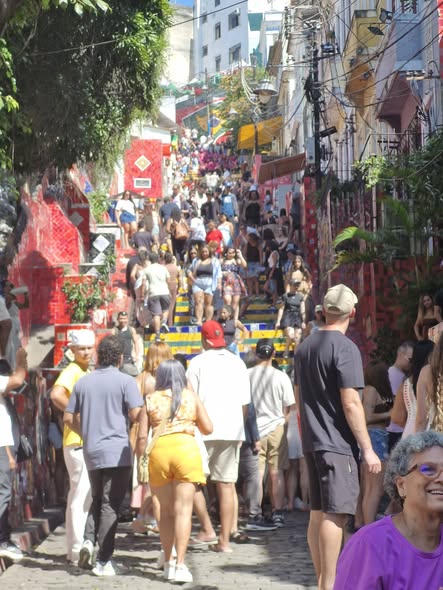
Selaron Steps
We took an Uber to the Selaron Steps – a famous stairwell decorated in beautiful tiles by a Chilean artist as a tribute to the city. It has become a popular attraction in Rio.
After lunch I took a solo stroll on Copacabana promenade. I had heeded the warnings and dressed down. Apparently petty crime is a risk but avoidable if you take the same safety precautions as you would any where.
At 4.30pm we gathered at the Jesus and His Father Universal church back in Rocinha. Third time lucky for a favela tour.
When I start working in the Dublin Wastelands in 2015, upon my return to Ireland after fifteen years in Amsterdam, I was hired into a position in the grim industrial wastelands of county Dublin. My training into my role was given by a person named Assumpta (not her real name). Assumpta was difficult. She treated me with hostility and contempt, engaging in subtle workplace bullying for a prolonged period. For reasons that were unknown to me.
The dilemma I faced was that nothing she said or did could be identified as clear bullying which would have allowed me to take steps to stop it. It more undermining. She never said ‘You really are useless’. It was along the lines of ‘I am concerned about the errors you are making, I am concerned about the negative impact your errors are causing to the business’ showing her to be a conscientious and diligent employee.
Afterwards she would pointedly ask other colleagues to go to the canteen for lunch and make it clear I was not included. She repositioned the picture on her locker so that she did not have to look at me. It was distressing and unpleasant. After a year – by which point I was fully trained and had zero communication with my nemesis – she moved to a new position (in a different building) in the company. We no longer worked together. A huge relief to me.
It was only at that point did I realise that she had interviewed for the job I had been hired for, but was unsuccessful in her efforts. But she subsequently had to train me into the position. An awkward position for her, for sure. But not remotely my fault.
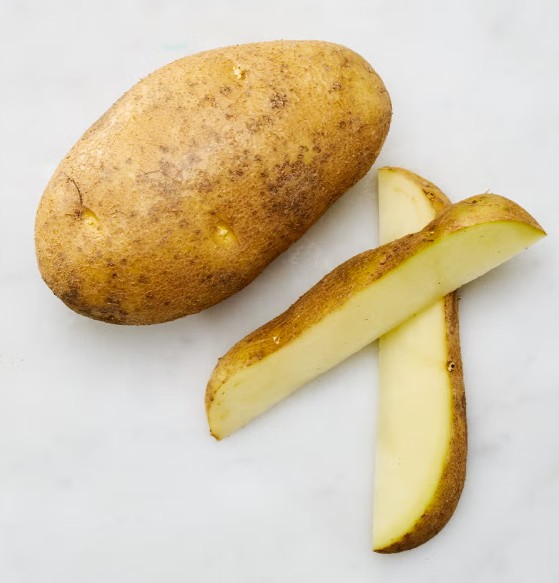
I internally nicknamed her Potato-Face because of her grey complexion and because it gave me a petty satisfaction..
She remained in the company. Our path thankfully never crossed again.
Today I learned that she has been diagnosed with motor neurone disease. A horrible affliction. I am sorry she has to go through this. On a human level I have sympathy for her and her family.
On the other hand she is one of the few people I have ever met that I shudder when I hear her name. She genuinely made my work life hell when I was fresh back in Ireland after decades away.
So I wish her peace in her difficult journey. And I won’t think of her again.
After more than quarter of a century, I moved back to Limerick a few years ago to settle back in to life in my hometown, . Limerick is a city – it has two cathedrals and a castle, and a population of about one hundred thousand people. Nevertheless when you live in the centre, you tend to remember faces that you encounter every day – shop assistants, bar-staff, office workers, market stall holders, neighbours. Street people.
Limerick is suffering like the rest of the country through the government’s refusal/inability to address the housing crisis. It is also in the grip of an addiction crisis. You see people with addiction issues on the streets, hustling for a fix. Some are friendly. Some are cunning. Some are vile. I fell victim to he baby formula scam some months ago. I was accosted one Sunday evening by a gentleman who had seen better days. He spun a yarn about how his girlfriend had just had a baby but that they couldn’t afford baby food, and could I help him out by purchasing some for him. Alarm bells rang in one ear, but ‘hungry baby’ was the louder voice in my other year. I was shocked by the price of baby formula but bought it anyway. Feeling suspicious when I got home I googled ‘baby formula scam’ and saw the sorry explanation for this caper. Mentioning a hungry baby is a foolproof way to tug at people’s heartstrings. Muggins here buys the baby formula in good faith, then the recipient then brings it back to the shop for a refund. The following day the shop assistant who had sold the item to me said this was exactly what happened. He wasn’t given a refund as he had no receipt. I hope he found a use for the baby formula. Had I been more alert I’d have clocked it as a scam immediately. However bad the homeless crisis is in the country, babies are not going hungry. I have seen the gentleman in question subsequently. I blank him. I can’t help everyone with spare change – there are too many. He ripped me off though so my meagre wallet is closed permanently to him. It’s also closed to people who have previously called me a ‘c**t’ when I couldn’t spare a couple of euro. Who would be dealing with that type of abuse?
Then we have Kevin. Kevin (not his real name) is kind of a legend among city centre workers and dwellers. He’s a man deep in the throes of addiction but remains quite friendly and talkative. He’s hustling of course, for heroin or crack cocaine – his substances of choice – but he doesn’t get abusive or belligerent if you cannot assist. I first met him shortly after I moved back. He was always pleasant when asking for money so when I had change I’d give it to him. I had no concern if he was spending it on drugs – he has no choice in this and is going to feed his habit somehow so two euros here and there from me isn’t harming him. I first got chatting to him when I burst out laughing at his request for a couple of euros to make a telephone call. He saw the funny side too.
Early January was cold. Horrifically cold – by Irish standards. Nighttime temperatures plunged to minus four degrees Celsius. There was snow on the footpaths. Compared to Canada or Finland this may seem tropical but for Ireland this is catastrophic – snow, ice, frost. There were colour coded warnings of ‘multi weather hazard events’ to terrify the nation. I was not scared of the weather. My fear was that Dublin Airport wouldn’t be able to de-ice the airplane on which I was due to fly. To Gran Canaria. In June last year a Finnish friend had asked whether I was interested in spending a few days in the New Year in the volcanic, mid-Atlantic, Spanish archipelago off the coast of Morocco. My response was in the affirmative. Little did I know that as the motherland hunkered down to deal with the cold spell, I’d be jetting off to enjoy BigTourism – Spanish style.
On the beach
Until January 2020 I had a snooty aversion to mass market tourism – preferring a nice city break where I’d get a false idea of what living in another European city would be like. My nose curled in contempt when I heard of the sun, sea, sand and sangria trips. ‘It’s just like Ballybunion, except with sunshine,’ I would sneer to myself. In 2020 I took the plunge and visited Gran Canaria for the first time. That trip was amazing – partly because I travelled with a friend who rented a car meaning that we saw the island from all angles – the western cliff coast, the volcanic centre, the capital city of Las Palmas, as well as the industrial tourist town of Maspalomas and its beach – Playa del Ingles. It was also because mere weeks after my maiden voyage to Gran Canaria the world shut down. My memories of that trip grew even fonder as the nation locked down. Thankfully the pandemic didn’t halt my wanderlust and I continued to travel throughout that bizarre time – just more discreetly so as not to attract the ire of the online twitching curtains. My first trip after my inaugural bout with Covid 19 was the day I came out of quarantine – to Gran Canaria where I met up with the Finnish friend I was visiting this January.
This time she would be accompanied by her daughter. I was joined by my regular, Irish travelling companion.
Delving into Irish history can be a depressing endeavour. Oliver Cromwell and his genocide; the Penal Laws; the Great Potato Famine of 1845 to 1851; are just tasters of the misery of the nation over the past five hundred years . Last night I stumbled upon another horror which had hitherto been unknown to me – the Year of the Slaughter between 1740-1741.
I had been aware that the the Great Hunger of 1845 – 1851 is regarded as a defining event in the creation of modern Ireland when one million people died from starvation and disease, and one million emigrated to the USA and Canada when the potato crop failed. The population of Ireland was eight million before the Famine and to this day is still below that level. In school in Ireland we learn about this tragedy and we know that Ireland remained a net exporter of food throughout this horror thanks to the English government’s murderous greed, cruelty and xenophobia. One eighth of the population died. One eighth of the population emigrated (and this emigrant population in North America became very important in securing Ireland’s partial independence in 1922).
Last night I discovered that one century earlier between 1740 and 1741 there was another Famine in Ireland that killed a greater percentage of the population.
Despite my near miss when I accidentally boarded the Tirana to Rome, rather than the correct Tirana to Bergamo flight, we landed in Bergamo on time at 10am. My flight back to Ireland was not until 9pm the following evening. My trip had been extended for a specific reason – I wanted to finally visit ‘The Last Supper’ by Leonardo DaVinci in Milan. This is a painting I have wanted to see since childhood. It’s not an easy undertaking, however. Located in a climate and temperature-controlled monastery, visitors are strictly limited in number. Tickets to see it are like gold dust. I had forked out fifty-four euros for a guided tour of the painting – justifying the price with the realisation that unless I was willing to pay this amount then I’d never likely see it.
I took a bus from Caravaggio Airport in Bergamo to the Central Rail station from there I walked to my hotel which took an hour. This was my first time in Italy’s second largest city.
Milan had never been high on my list of places I wished to visit. Italy is such a beautiful country there always seemed to be a more appealing option. This time was different.
Duomo di Milano
After dropping my bags at my hotel, I strolled over to the Duomo di Milano – the ridiculously ornate cathedral of Milan. It’s an architectural marvel on a par with the Sagrada Familia in Barcelona. To take the lift to the roof was more expensive than to take the stairs but it was my chosen option. Having walked an average of twenty kilometres per day while in Albania my leggies were exhausted. I must give props to the Catholic Church – they know how to do a glamourous church.
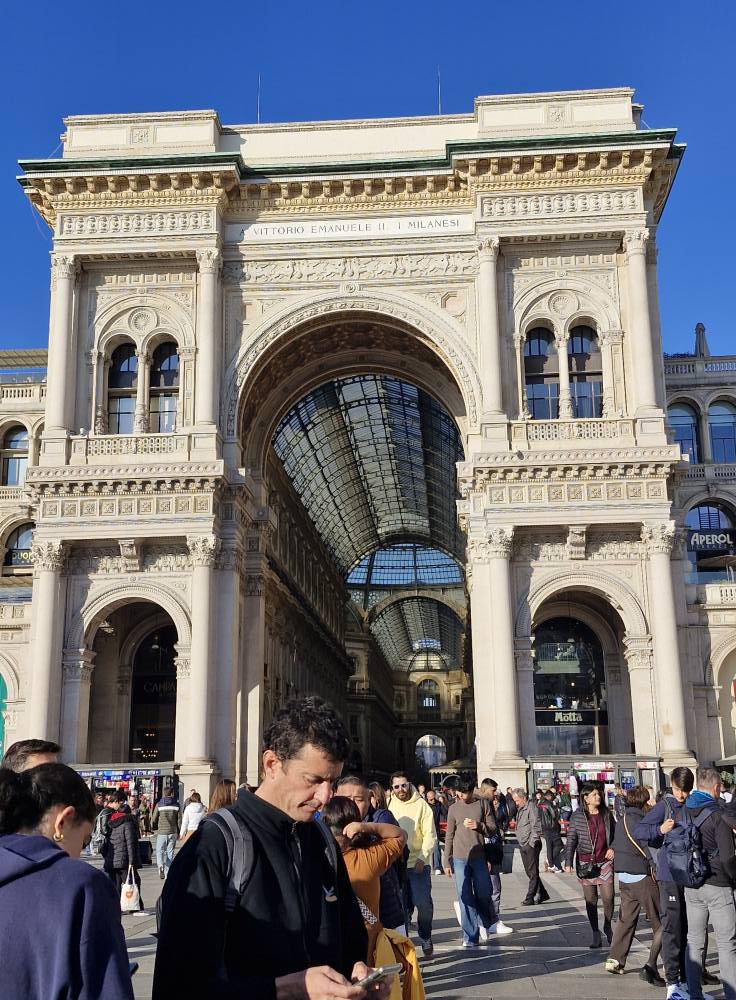
I spent an hour on the roof and inside the church before exiting on the Piazza Del Duomo and made my way to the Grand Galleria Vittorio Emanuele II on the square. This is an opulent nineteenth century shopping mall housing all the unaffordable Italian designer labels – Milan is a world centre of fashion on a par with Paris and New York. You can tell – the locals are impossibly thin, beautiful, and stylish. I didn’t buy anything. The prices were not visible on many items indicating that it would require a mortgage to buy them.
Grand Galleria Vittorio Emanuele II
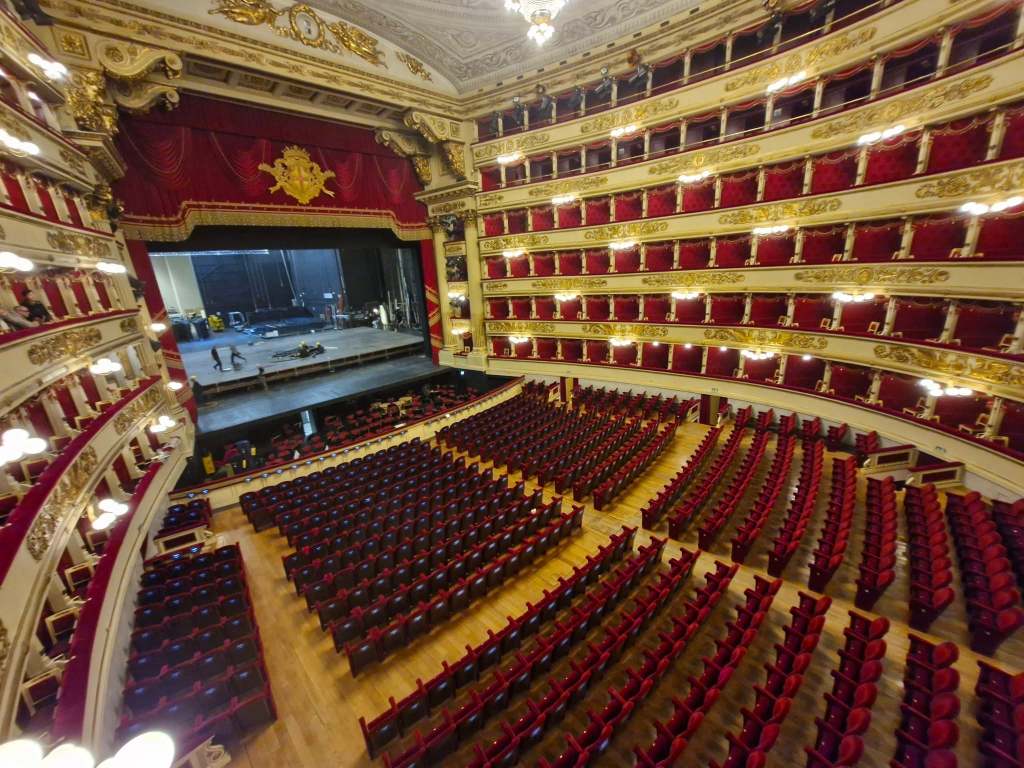
Making my way to La Scala opera house I noticed a queue coming out the door. There was a self-guided tour of the place. I waited in line behind an Italian woman who took about fifteen minutes to purchase her ticket. Why rush I guess. It’s an interesting building with an informative museum included. Not quite on a par with La Fenice in Venice, but in the vicinity.
La Scala Opera
The fifteenth century Castello Sforzesco is located a fifteen-minute walk away. Relieved to discover that its museum was closed on Monday I whiled away an hour wandering about its grounds, before heading back to my hotel.
My flight to Tirana in Albania was via Bergamo in Italy – or ‘Milan-Bergamo’ as Ryanair calls it – as if Bergamo is a mere suburb of Milan and not a separate city of 120,000 people, more than fifty kilometres away. Flying over the Alps into Bergamo gave impressive views – not a cloud in the sky with mountains, towns and lakes fully visible from the airplane forty thousand feet in the sky. It was Friday November 8th, 2024, and for the first time in my life I was visiting the Balkan nation of Albania. Landing at 11.10 in Bergamo I had a four-hour layover until 15.20. My friend G was waiting for me in Tirana – he had arrived from Heathrow a few hours before I landed.
Skanderberg Square, Tirana
The internet had warned me that public transport from the airport to the city centre was sporadic, so we had booked a transfer to our apartment with our landlord at a decent price. What a very friendly and talkative man. He gave us a running commentary about the buildings we saw on the way to the city centre. He told us that the route to the airport was like a continuous building site as Italian investors were swooping in to erect buildings now that the Albanian government has decided that Albania needs to become Mediterranean tourist hotspot.
Our apartment was located about fifty metres from the city’s main Skandenberg Square. We dined that evening at the restaurant Ceren Ismet Shehu in the grounds of the Toptani Castle just off the Square. This was a traditional Albanian restaurant with a wood fire burning in the middle. A very tasty and very meat heavy dining experience. The Toptani Castle has become a nightlife area so after our meal we enjoyed a few glamourous cocktails for about a quarter of the price you’d pay in Ireland (one hundred Albanian lek is worth about one euro).
Our plane touched down in Ibn Battouta Airport in Tangier at 9.50pm on Saturday night so we hopped into a taxi driven by a friendly man named Omar and asked him to call our host Mohamed. We were going to be staying on the narrow laneways of the walled old town (medina) of Tangier so he had to give Omar instruction where to drop us so he could take us to our lodgings. The medina is inaccessibly by car. Our house was an old-style house with a rooftop courtyard and blue tiles on the walls. It was already quite late when we arrived, so we headed over the coast (about ten minutes’ walk away) for an evening meal before heading to bed for an early night. There was walking to be done the following day and we wanted to be fresh.
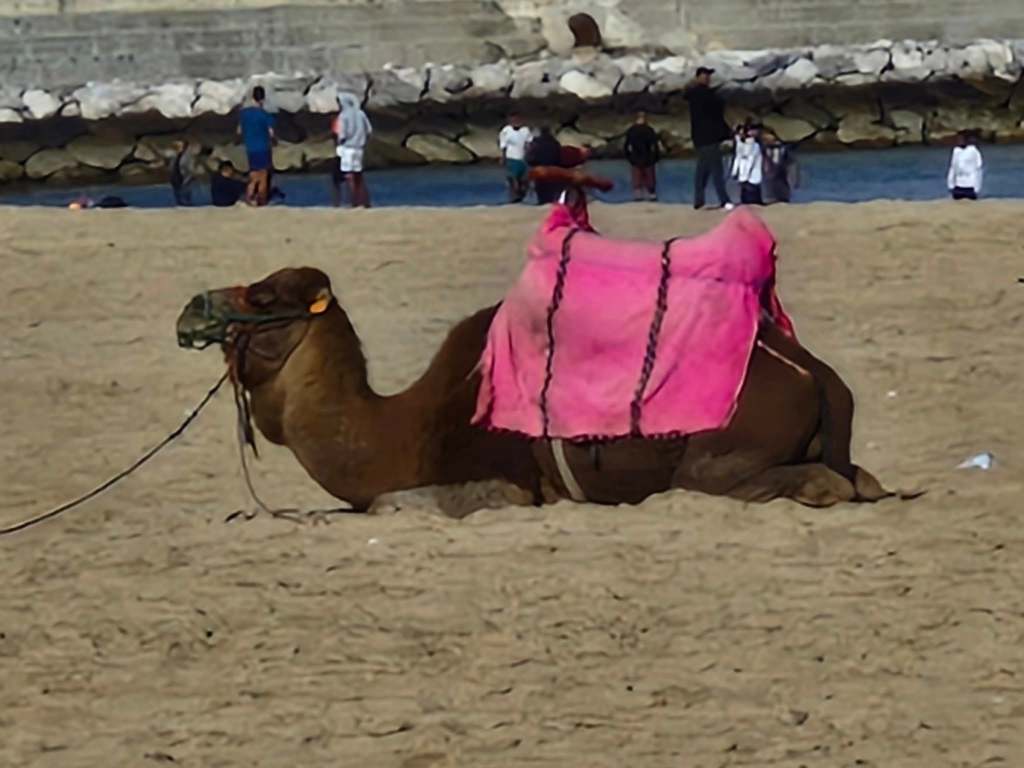
Break from a busy day, Tangier
The following day gave us sunshine so after a quick outdoor coffee on a terrace in a medina café with indoor smoking and without tourists, we walked down to the coast (La Corniche) again for a breakfast looking at the sea. Based on my judgement (and Google Maps) the landmass in the distance must have been the southernmost tip of Spain. Tangier is located on the Tingitan peninsula and is on the coast where the Atlantic Ocean meets the Mediterranean Sea. We took a walk along the beach where we spied some camels in the distance giving rides to tourists for a cash payment. A friendly local dog approached us and sat with us for half an hour before heading on his way. I noticed that he had a yellow plastic earring. I wondered what that was. Lunch was consumed outdoors where I had a lamb shawarma – a dish traditional to the Middle East but seeing as Morocco is an Arab-Berber country the cuisine is similar. Moroccan cuisine is very tasty but not new to me. Having lived in Amsterdam – a city with a large Moroccan population- for many years I know my Moroccan dishes.