Our hotel – the Tara Angkor in Siem Reap – was an old school luxury hotel with doormen and a welcome tea. We dined in the restaurant but did not venture into the city that night. We had an early start on Thursday morning – getting picked up at 4.30am to see the sunrise over Angkor Wat temple.
Angkor Wat is a Hindu-Buddhist temple complex in Cambodia. Located on a site measuring 402 acres) within the ancient Khmer capital city of Angkor, it is the largest religious structure in the world. Originally constructed as a Hindu temple dedicated to the god Vishnu in the early twelfth century, it was gradually transformed into a Buddhist temple towards the end of the century. Sunrise was breathtakingly beautiful. The area around Siem Reap is home to several thousand temples – our tour would be visiting a few.
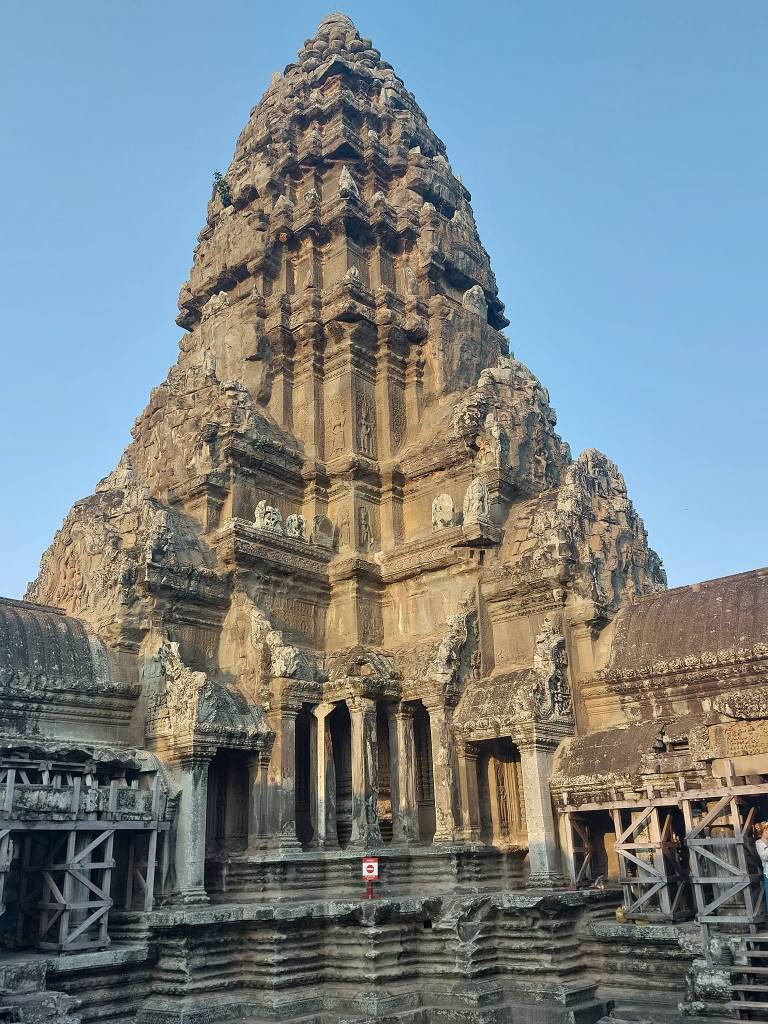
Afterwards we went to Ta Phrom temple where ‘Tomb Raider’ was filmed. Finally we saw the Bayon Temple in Angkor Thom – the old capital city of Cambodia. When the Hindus attacked this temple they didn’t destroy the statues of Buddha, merely altered them to make them look like Vishnu.
Breakfast at 10am was Lak Lok (beef stew and rice) in an air conditioned restaurant. We got chatting to a Derry couple on a year long round the world tour
Our tour guide Nick (his real name is Kasal but his western name is Nick) is a Buddhist 95% of the time. Except on days when he wants a beer or to gamble. On those days he is a Catholic and he asks for God’s forgiveness before reverting to Buddhism. This is his own explanation. It seems eminently practical. As well as being a tour guide Kasal is also a chicken farmer and raises 200 chickens for meat. His chickens are favoured by the local population as they are not pumped full of growth hormones and they live in his back yard.
Before Covid he was employed fulltime as a tour guide but nowadays he freelances – therefore good reviews are important for his income. At the end of the day I left a glowing five star review (as well as a cash tip which seemed more immediately beneficial.)
We arrived back at the hotel around midday at which time the temperature was reaching forty degrees.
Across the road from the hotel was the National Angkor Museum. As well as being a museum showing the history of Cambodia – including artefacts that used to be displayed on the Temples we had visited that morning – it was also air-conditioned. The heat was threatening my blue-hued legs, so an afternoon at the museum seemed sensible.
I learned the correct posture for meditation, as well how the Buddha entering nirvana is portrayed. This was shown in the ‘Room of 1000 Buddhas’.
Buddhist king Jayavarman VII of Angkor Thom supported religious tolerance in the 12th century. He allowed portrayals of Buddha with Hindu accoutrements to encourage harmony between the beliefs in his kingdom. He also built hospitals, roads, and hotels. Quite the forward thinking royal.

That evening we took a tuk-tuk to Pub Street in Siem Reap. The street is self explanatory – lined with bars and restaurants and tourist shops on either side. I had a vegetable spring rolls for starters; rice, chicken and vegetable for main and a pint of beer. It cost the equivalent of ten dollars. We met our tuk-tuk driver at the appointed time and place and he drove us home. We refused his offer to take us to a place where we could have a ‘special massage’. The mind boggles.
Our second full day also involved a temple tour (we had purchased a three day pass the morning before and our ticket was checked at the entrance to every site). Dara was our guide on this second day
First it was Preah Khan temple, followed by the Neak Poan temple. Both were built as either Hindu or Buddhist places of worship.
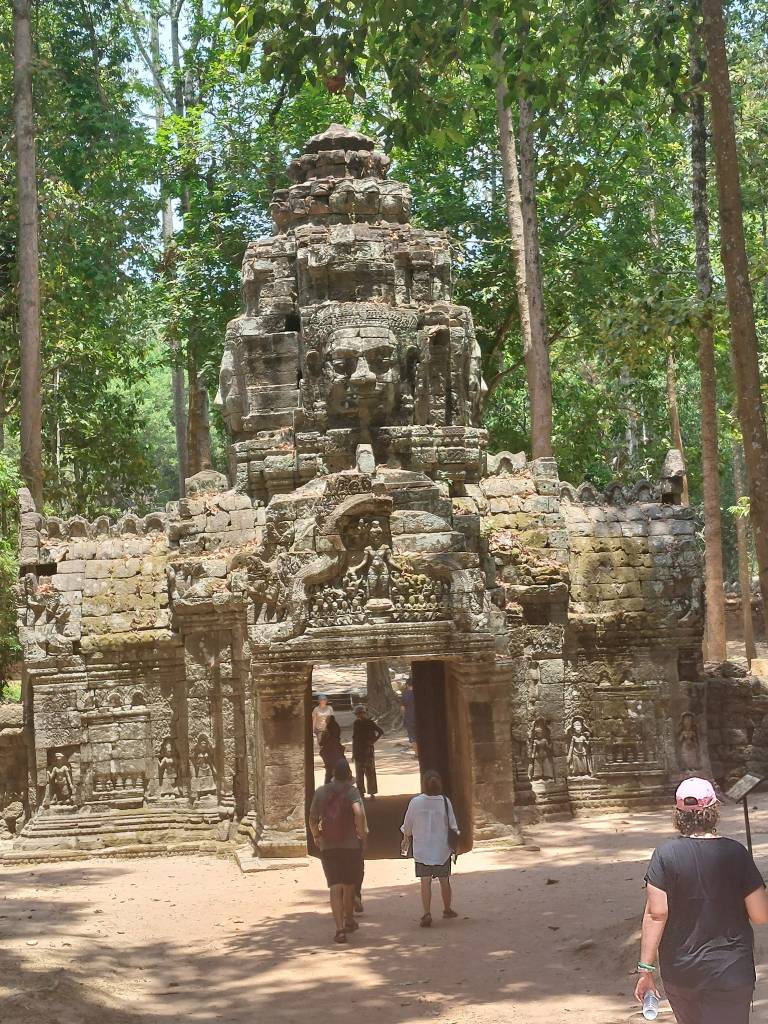
Afterwards a trip to the Ta Som temple on the island in the middle of the reservoir built to commemorate the King’s sister. On the way out I commented on how lovely it was to the Russian woman on the tour with us. She looked at me like I was Ukraine, so aggressively hostile was her look. I retreated.
After an amok curry lunch (chicken, cabbage and rice which tasted like a less spicy version of Thai green curry) it was onwards to East Mebon temple – the oldest in Cambodia dating from 950AD. Lastly it was the Pre Rup Temple.
Finally we climbed the Bakeng mountain to watch the sun set. This was quite the ordeal as it was so very hot. The Buddhist monks at the summit were having a great time offering selfies with those who asked (for a cash tip).

After a Khmer dish on Pub Street that evening we used Google to locate the Barcode bar – Siem Reap’s gay cabaret bar. It was rather bizarre to see drag queens lip-syncing to ‘Believe’ by Cher or ‘Your disco needs you’ by Kylie Minogue. Interesting certainly but surely a sign of how dreary and homogenised gay culture has become? This was the same schlock you’d see at the George in Dublin. Maybe they were catering to a solely tourist audience? I don’t know.

The following morning we decided to take a time out – the trip had been tension free but some alone time would be appreciated. I walked the kilometre to the APOPO visitor centre to visit some hero rats.
These rats have been trained to detect landmines (at no harm to themselves as they only weigh 3kilos so too light to detonate the explosives) which can then be decommissioned by mine disposal experts. They have helped clear thousands of hectares which were mined during the Vietnam war, the genocide of 1975 to 1979 when 25% of the Cambodian population was murdered, and the civil war which lasted until 1999.
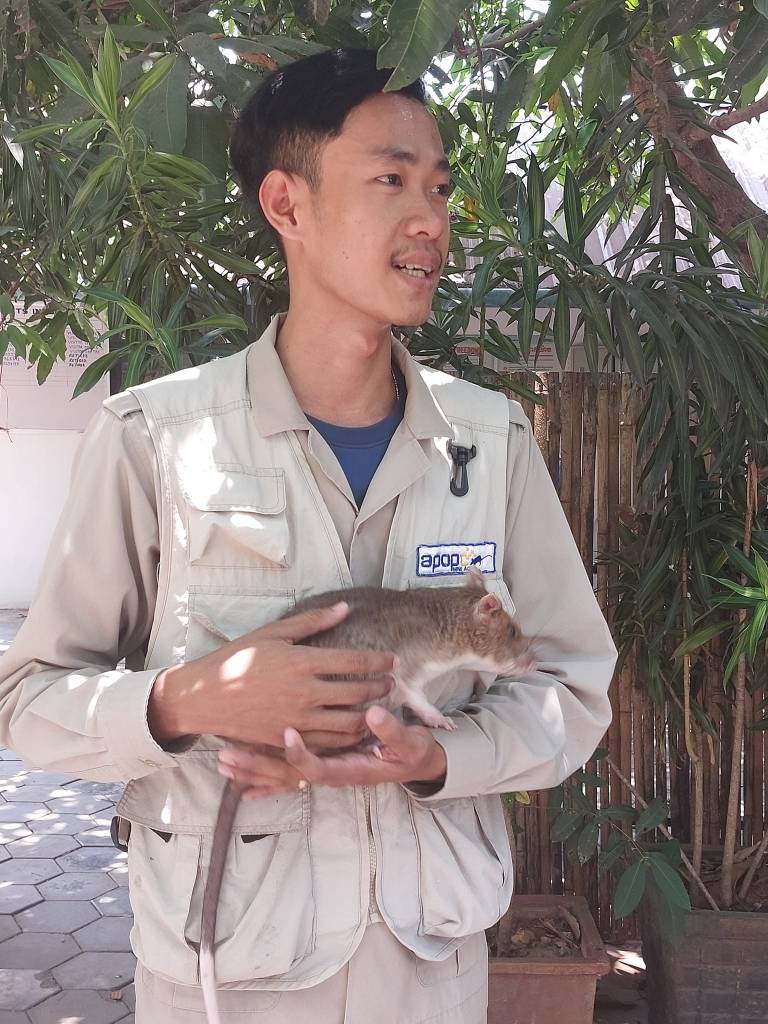
African giant pouch rats are from Tanzania and live up to 8 years. They have highly developed smell and and trained to sniff out TNT. They work Monday to Friday from 6am to 9am (afterwards it’s too hot for them). They can clear four hundred square meters in an hour (metal detectors can also detect mines and are necessary in certain terrain, but take four days to clear an equivalent area). They are tested every month to ensure their sense of smell is still accurate. They have located five thousand mines and forty thousand mortars since 2015. APOPO is a Belgian NGO and is one of six anti-mine groups working in Cambodia.
Kasal our tour guide from Thursday arrived at 2pm at our hotel on a tuktuk with a driver. We had arranged a private tour of Siem Reap for that afternoon. We went the Siem Reap War Museum. The Americans, and the Russian backed communists were horrible people during the Vietnam War – Cambodia had more bombs dropped on it than Vietnam. Apparently the Viet Cong used Cambodia as a hiding place and therefore the country became a target.
Afterwards Kasal took us to the Wat Thmei Killing Field of Siem Reap. The Killing Fields of Cambodia happened during the Pol Pot regime and are probably the most famous element of the country’s genocide. I need to read more about the subject. It was a heart-breaking place to visit.
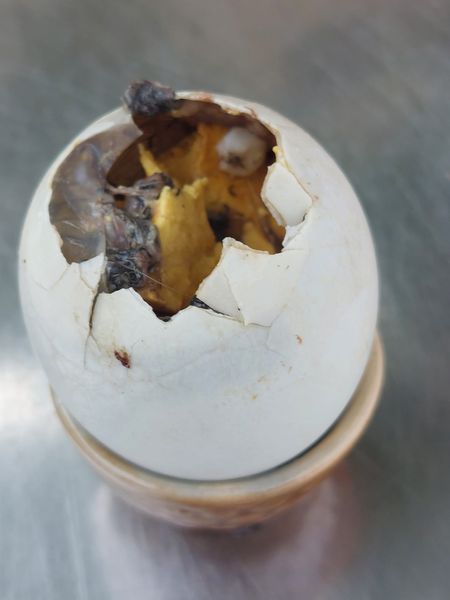
Next was a roadside stall where I ate a very special duck egg. Duck eggs take twenty one days from being laid to being hatched. If however you boil them at sixteen days then they have a strange texture between meat and egg. I ate it very fast to avoid thinking about what I was doing.
Then to the street market where we sacked on crispy, salted cockroach, cricket and frog. Crunchy goodness.
Finally to the Diamond Palace Khmer restaurant which has no Facebook page unless you can type in Cambodian as it’s locals only. We drank beers with Kasal, his mistress (his wife was at home), and one of his friends. We bid him farewell as night fell. Our last night was an early one. At noon the following day we were flying to Bangkok for the last stage of our holiday.
Siem Reap airport brought to mind the Covid lockdown – a vast, empty airport with only a handful of daily flights – all to Thailand, Vietnam and Malaysia.
Cambodia is the most interesting country I have ever visited and is a place I want to revisit .
 midnightmurphy