We dropped our bags in our apartment and made our way to Avenida dos Aliados (Allies Avenue – commemorating the 14th century military alliance between Portugal and England which is the world’s oldest, and still in existence). We were joining a two-hour free walking tour which would take us around the old city of Porto. It was a fascinating trip – taking us to the Sao Bento train station – a blue-tiled UNESCO world heritage site, to the Torre de Clerigos – the tallest structure in the city, to the cathedral, to the winding streets of the old town where the Portuguese lured the Napoleonic armies and roundly defeated them. We spotted the queue for the Livraria Lello bookshop and there was a massive queue for entrance. This bookshop is regarded as one of the world’s most beautiful, and is allegedly the inspiration for the shop where Harry buys his school supplies in the Harry Potter books. JK Rowling has subsequently said that she has never visited the shop, which seems unlikely. A writer who lived in Porto for two years where she began writing Harry Potter, never once visited one of the world’s most famous bookshops? It strikes me as unlikely.
We didn’t venture down to the river front on this afternoon but were told that this was where the picture postcard beauty of the city with the bridges could be most easily observed. We had plans to see that already made for the following day. I dined that evening on cod and wine. A three-course meal for two with coffee and a bottle of wine came to a total of €76 – probably about half the price one would pay for such a repast in Ireland. Our night ended with margaritas at Fabrik Bar – a place for fancy gentlemen and ladies with sensible shoes.
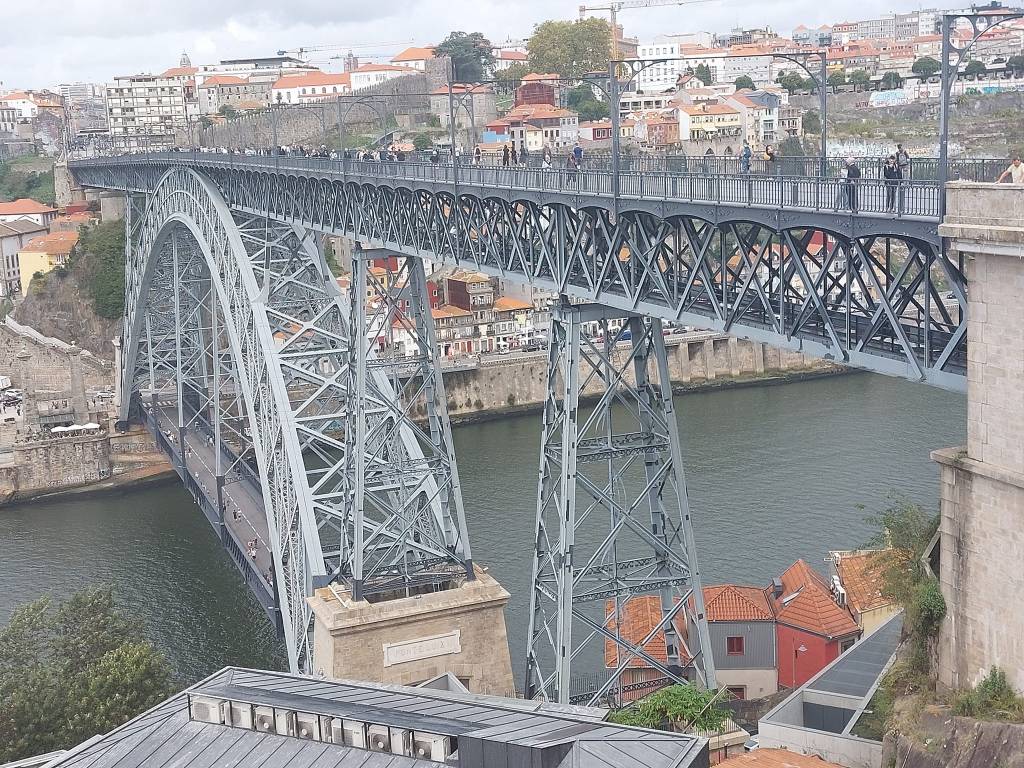
The following morning was spent at work. Finishing at midday we went down to the Douro River where the breath-taking beauty of the city was revealed. We crossed the Douro River on the Dom Luis I bridge – a double deck metal bridge designed by a colleague of Gustave Eiffel. We walked along the upper deck where the majesty of the river and the city is evident. Within minutes we were in Vila Nova de Gaia – a separate city but part of metropolitan Porto district. We were aware from our walking tour that this side of the river is where all the wine cellars are located. They were built here, many centuries ago so the owners could avoid paying tax to the crown and church, as required on the Porto side of the river. We crossed back over the bridge and had lunch on the Cais da Ribeira – the riverside area. I tried the national dish of francesinha. Invented in the 1960s it is a Portuguese take on the croque monsieur – a toasted white bread sandwich filled with assorted meats, covered in melted cheese and sitting in a bowl of spicy tomato and beer gravy. With a fried egg on top. Out tour guide Ana from the previous day told us that the dish’s creator Daniel David da Silva wanted to make a spicy dish to encourage Portuguese women to cool off by discarding their dowdy, dictatorship era frocks and dress like the more glamourous women he saw in France and Belgium. After lunch we took the Six Bridge’s Boat Cruise. The voiceover was in Portuguese which didn’t matter – the beauty of the city from the river required no explanation.
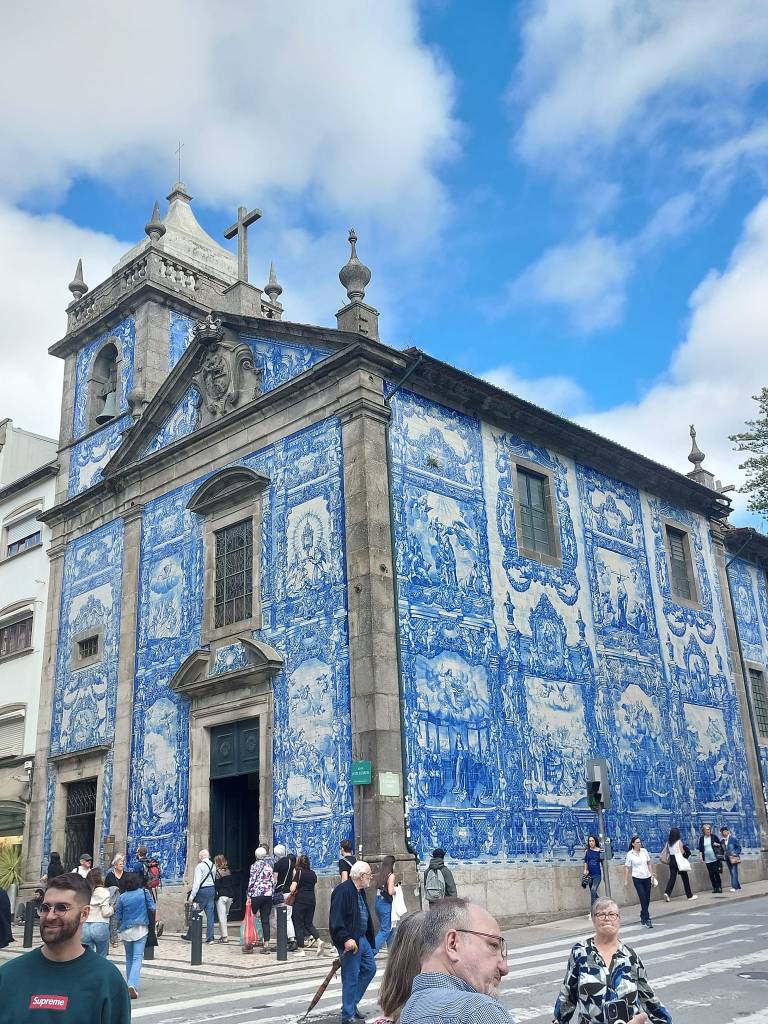
On Friday we made our way to the Torre de Clerigos – Clerics’ Tower – the tallest structure in the city. We climbed it. The views from the summit were spectacular. The viewing platform way up in the sky is tiny. About twelve people at a time. A pair of German tourists seemed to have taken the opinion that they’d spend the afternoon up there. After ten minutes the other ten people started getting anxious. There was no tower staff up there to keep things moving. It relied on people using their common sense to keep moving and understanding that there was a growing crowd of people waiting on the steps in the narrow tower waiting to emerge.
Eventually my friend shouted ‘Sorry is there a problem? Why is no-one moving?’
‘There is a traffic jam’ responded the German man.
‘Caused by you’ I thought to myself. Descending the tower was more difficult as there was a backlog of people jammed onto the stairs.
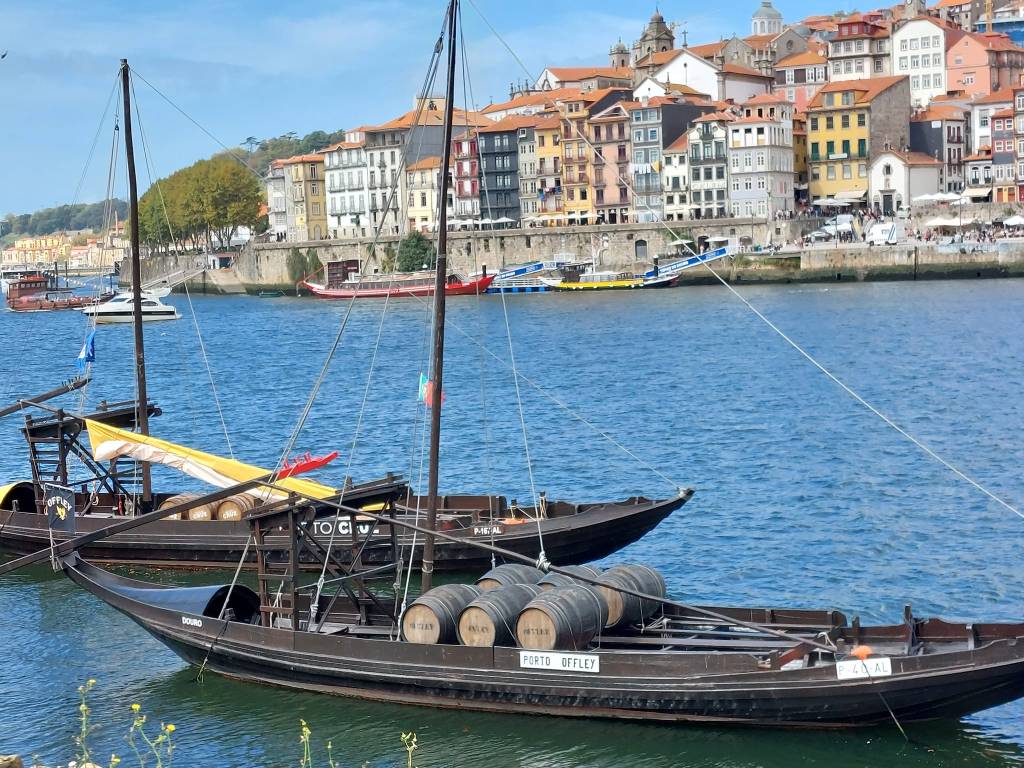
We had a wine walking tour booked that Friday afternoon. We met our group at the base of the Dom Luis I Bridge and crossed the river from the lower deck. Our first stop was the Fonseca port wine cellar. Port wine is a fortified wine (and like champagne only fortified wines produced in this part of Portugal can be called ‘port’). The wine has more alcohol than regular wine as it is mixed with brandy. It was created in the seventeenth century so it could be exported to England. England was at war with France at the time, so supplies of French wine imports were scarce. The Douro valley wines from Portugal had turned to vinegar by the time they arrived in England, so port was created as it lasts for years. We sampled both traditional red port and a white port. It’s strong stuff at about 20% alcohol content. Our second tasting venue was in town where we tried the vinho verde (green wine) from the Minho province in this part of Portugal. These are young wines released only three to six months after harvesting. They are slightly sparkling and about ten percent alcohol content so light enough. Our third tasting venue was near the City Hall. I can’t remember much about the place except for the English tour participant who explained in dreary detail to me about why South Africa would beat Ireland in the World Cup rugby the following night. I couldn’t have cared less, but feigned vague interest, so as not to appear rude.
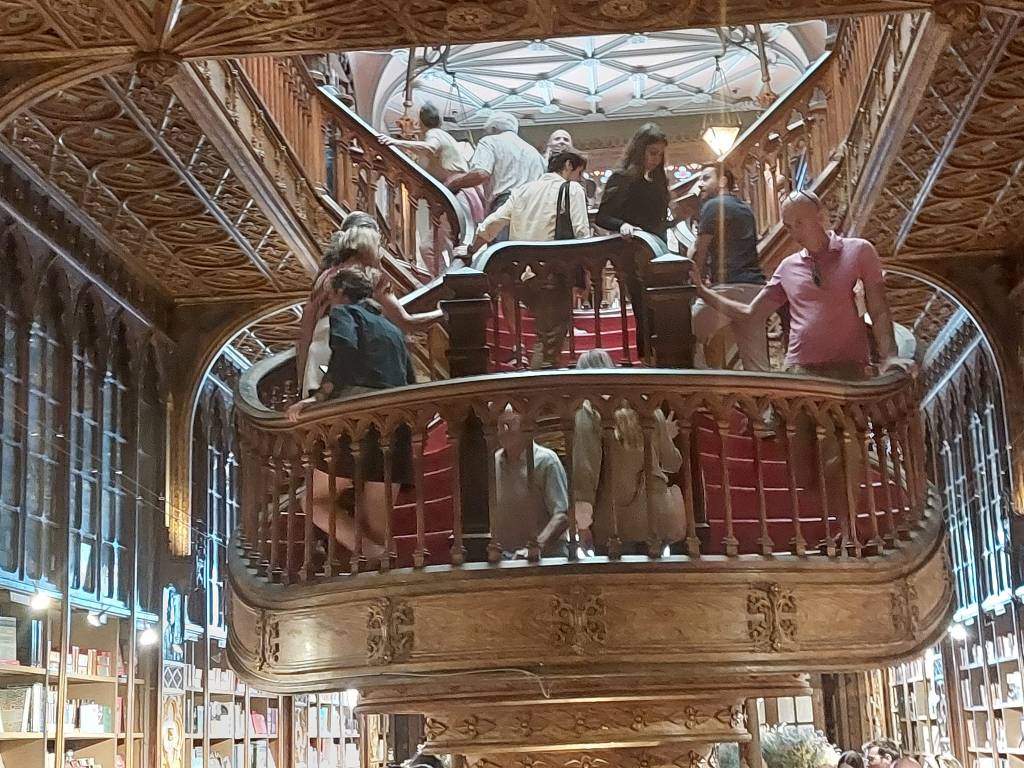
On the day I arrived in Portugal I had received text messages from two friends from Dublin who told me they were doing the Camino de Santiago and arriving in Porto on Saturday before starting their non-religious pilgrimage the next day. We met them at the famous Bolhao Market where unfortunately no table was available. Instead, we made our way to a terrace for an outdoor lunch in the twenty-five-degree heat. After lunch we paid eight euros each to enter the Livraria Lello (the bookstore JK Rowling never visited). The forked staircase and decorated walls are things of beauty. It is slightly outrageous to charge an entrance fee to a shop, but they offer an eight-euro discount on any purchases. I bought ‘Rebecca’ by Daphne DuMaurier. The evening was spent in a grotty Irish bar named Ryans to watch Ireland beat South Africa. The bar really tried to make us feel like we were at home by charging almost double what an equivalent Portuguese bar would cost.
Sunday was our last day. I bid farewell to my friend who was returning to London. My flight was not until 10.30pm so I had a full day. I took the train to Guimaraes about fifty kilometres from Porto where the first king of Portugal had built his castle. The thousand-year-old castle was closed for maintenance, but I visited the Dukes’ Palace instead. It was tranquil in that ancient town as tourists were far fewer in number.
I was sad to leave Porto which to my delight had far exceeded my expectations. Not that I had expectations of Porto – I knew little about the city before visiting. A recommended destination.
 midnightmurphy